



What was this dream trying to tell me?
A Group for Experiential Dream Work and Interpretation
Some dreams do not end when we wake.
An online group with Marcelo Cunha to deepen your relationship with your own dreams.
Explore the groupExperiential dream work
What working together makes possible.
Dreams carry important messages for our growth and waking life. In the group, working experientially with your own dreams, studying Jung, and learning to interpret dreams complement one another. This group offers an opportunity to explore your dreams in a way that differs from individual psychotherapy or group therapy:
- 01
Sharing
Listening to others helps us find new ways of approaching our own dreams.
- 02
Experiencing
Attending to dream images and what they awaken in us turns the dream into a living experience.
- 03
Empathy
A space for listening and respect, without judgment or any obligation to disclose intimate details.
Facilitated by Marcelo Cunha, a licensed psychologist (CRP 04/48283 - Brazil), who holds a graduate-level certificate in Analytical Psychology and is an Analyst-in-Training at the Instituto Junguiano do Rio de Janeiro (IJRJ / AJB / IAAP).
For two years, Marcelo participated in two experiential dream groups led by Marion Gallbach, PhD (University of São Paulo, C. G. Jung Institute Zurich, SBPA). He also underwent personal analysis and received clinical supervision with her. She is widely recognized as a leading Brazilian authority on dreams and experiential group work.
Explore the foundations of this work
Marion Gallbach, PhD, holds a doctorate in Clinical Psychology from the University of São Paulo, taught at PUC-SP, and trained as a Jungian analyst at the C. G. Jung Institute Zurich. She is affiliated with SBPA/IAAP. She underwent analysis with Aniela Jaffé, who was herself analyzed by Jung and edited Memories, Dreams, Reflections. Gallbach became one of Brazil’s leading figures in dream work and experiential groups. She is the author of Aprendendo com os sonhos and Sonhos e gravidez. The approach also draws on Jung, Robert Bosnak, and Marie-Louise von Franz, within a flexible format developed and facilitated by Marcelo.*
Jung and the study of dreams
One of the modern era’s deepest investigators of dream life.
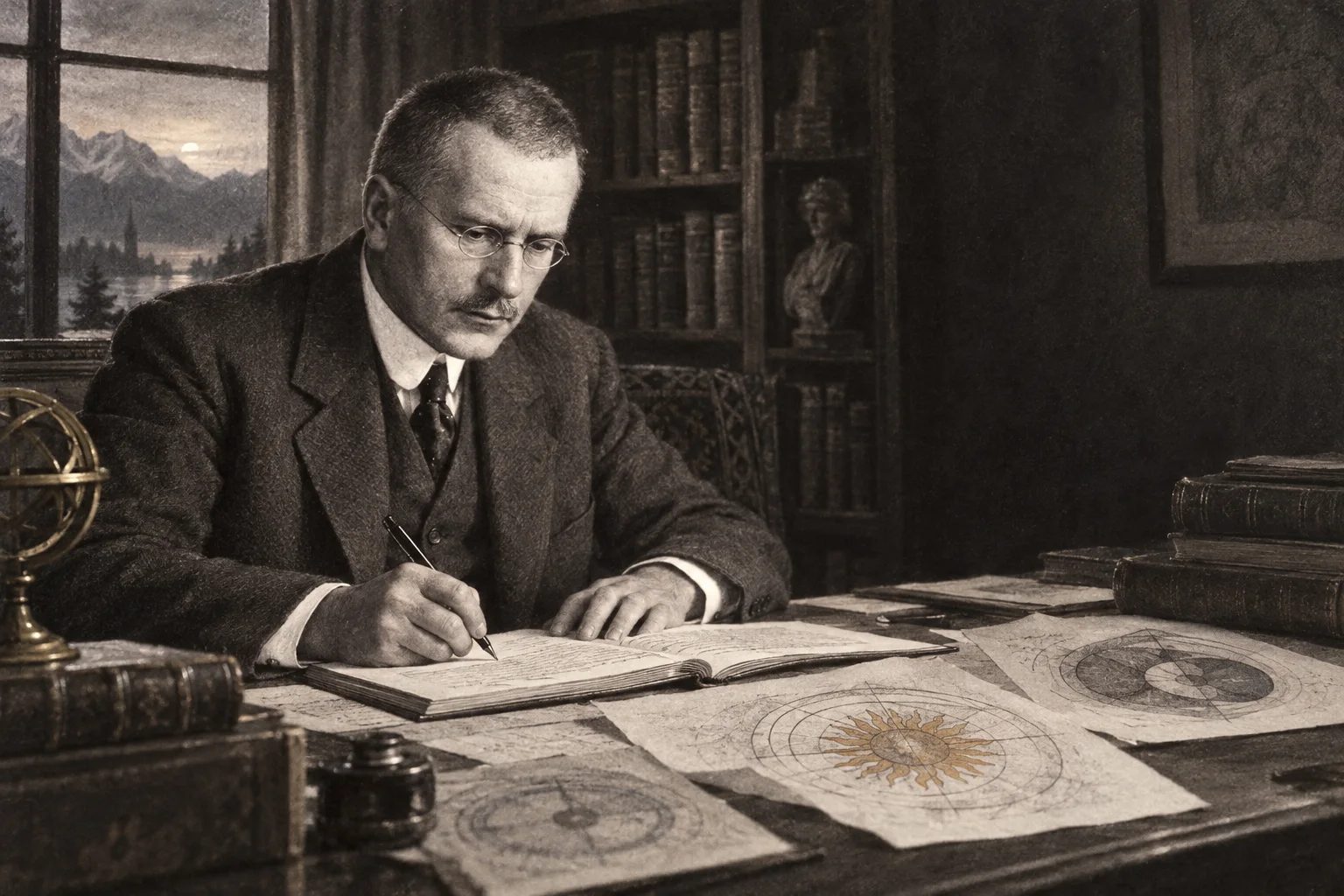
Carl Gustav Jung, the Swiss psychiatrist who developed the clinical version of the Word Association Test, contributed to the early development of psychoanalysis, and founded Analytical Psychology, devoted his life to studying dreams. He reported examining up to 2,000 dreams a year. For Jung, dreams were more than disguises for impulses: they opened paths toward understanding inner life. Each dream was considered in relation to the life history of the person who dreamed it. Contemporary research in affective neuroscience and sleep medicine increasingly aligns with many of Jung’s core clinical intuitions regarding the emotional and compensatory nature of dreams.*
“The dream is a little hidden door in the innermost and most secret recesses of the soul, opening into that cosmic night which was psyche long before there was any ego-consciousness, and which will remain psyche no matter how far our ego-consciousness extends.”
“Dreams are messages sent up from the unconscious and show what is actually going on there.”
The experience
Deciphering the dream.
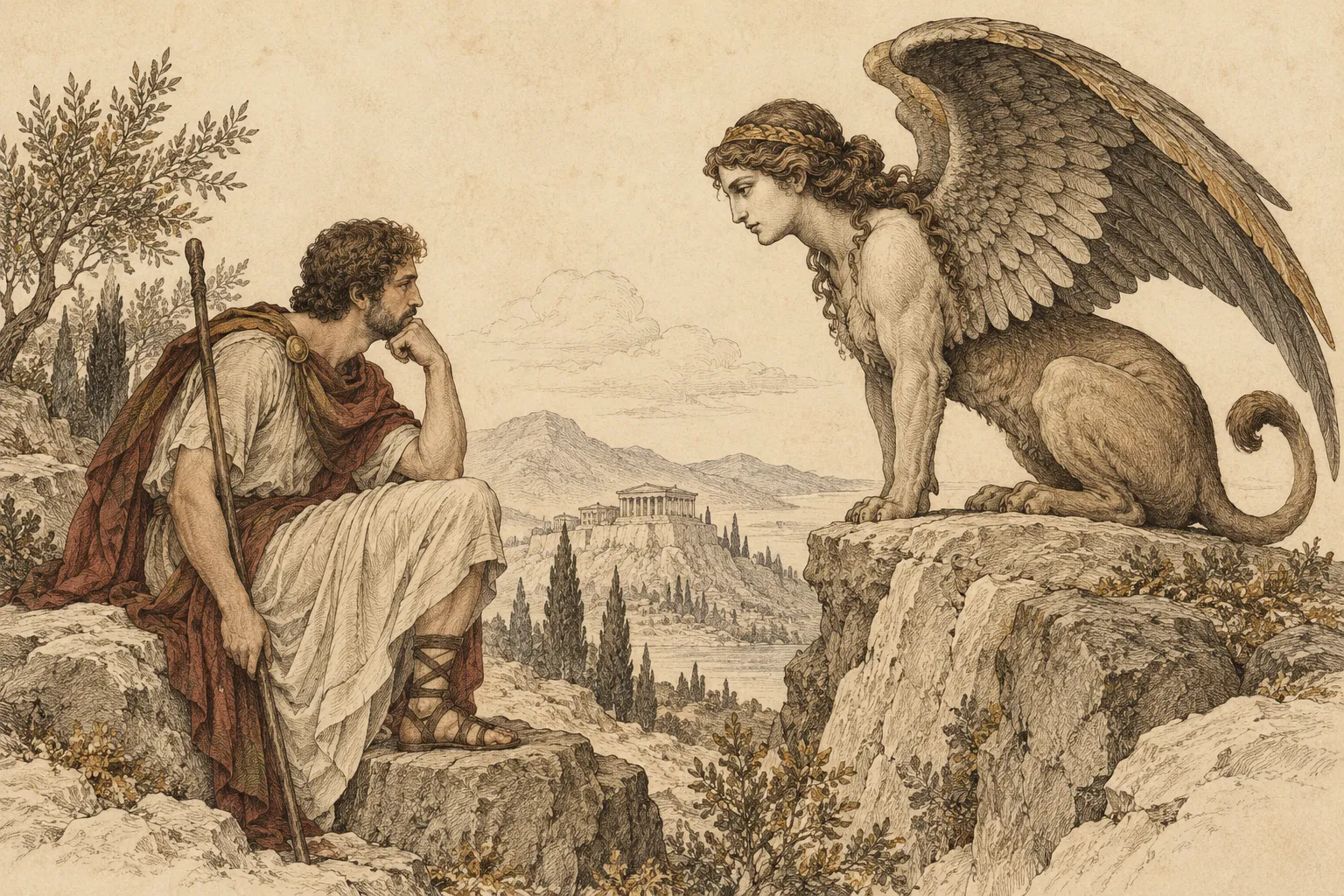
“Stick with the image”—this invitation from James Hillman* guides our meetings: staying with the image, noticing what it awakens, and allowing it to take root within us. You do not need an extraordinary dream. Even a small scene can open an important conversation with yourself.
Before the “riddle of the sphinx,” there are no ready-made meanings. Another soul, or other souls, help us reflect—turning our gaze inward. Through this dialogue, meanings emerge that we would not see on our own, while keeping in mind that the dream is yours.
The framework
Continuity gives the dream room to work.
- Format
- Online, in English
- Meeting schedule
- Every two weeksor as the group prefers
- Session length
- 1.5 hoursor as the group prefers
- Group size
- To be arrangedup to 12 participants
Getting started
Forming a group begins with a conversation.
A representative of an interested group can get in touch to explore the proposal, ask questions, and discuss the group’s interests with Marcelo. The meeting schedule, session length, and other arrangements can be negotiated. Group size is arranged together, with a maximum of 12 participants.
Do I have to share everything I dream?
No. You choose what you wish to share. The experiential activities are varied and flexible, respecting each participant’s boundaries. The group agrees to keep what is shared and experienced together confidential.
Does the group replace psychotherapy?
No. It is an opportunity for self-understanding through dreams, not group psychotherapy. It can accompany psychotherapy, but does not replace clinical care when needed.
First contact
Tell me about your group’s interest.
Sharing a few details will help me understand your group’s interests before I respond. All inquiries are received directly in strict professional confidence.